
Bihar has fertile grounds for caste to emerge as an electoral issue.

Wilful defaulters owe SBI Rs 80,000 crore. 10 nationalised banks are owed another Rs 1.5 trillion.

In the current calendar year, small and medium enterprises (SMEs) have witnessed an impressive surge in initial public offerings (IPOs), surpassing the 2018 record. Over 150 SME IPOs have been introduced to the market, breaking the previous record of 141 set in 2018. According to data from PRIME Database, a primary market tracking firm, 147 companies successfully concluded their debut share sales by the end of October, raising a cumulative Rs 3,727 crore.

The number of companies had touched a low of 792 in July 2020 amid heightened uncertainty because of COVID-19.

South Korea's move to ban stock short-selling may further delay its quest to bag an 'upgrade' to 'developed market' status from global index provider MSCI, said analysts. South Korea will prohibit stock short-selling until June 2024 to allow its regulators to "actively" improve rules and systems. South Korea is currently classified as an 'emerging market (EM)' alongside India, China and Taiwan in MSCI indices.

This is the case even though the benchmark index is only 5 per cent below its all-time high. The list of stocks trading at a discount primarily consists companies in the automotive, banking, oil and gas, insurance, healthcare, and metal sectors.

India's trade ties with Israel have only strengthened in the years after 2019. The total value of trade rose to $10.5 billion on a rolling four-quarter basis in June 2023 from $5.5 billion in the same month in 2019, shows a Business Standard analysis of data from the Centre for Monitoring Indian Economy (CMIE). A rolling four-quarter number provides a comparable figure across different time periods.

People are availing far more of certain kinds of unsecured loans than was the case before the pandemic. Bank lending for buying consumer durables and funding of credit cards and other personal loans have risen by Rs 6.9 trillion between August 2019 and August 2023, shows a Business Standard analysis of data from the Reserve Bank of India (RBI). These loans are typically unsecured, which means they are provided without collateral.

As many as 31 mainboard IPOs raised a cumulative Rs 26,272 crore in this period, according to Prime Database. During the April-September 2007 bull run, 48 IPOs totalling Rs 21,243 crore were launched. The number of deals in H1FY24 was 2.2 times that of the same period of the last fiscal year, but the amount raised was 26 per cent lower.

Nextbillion Technology (Groww), the venture capital-backed broking platform, has dislodged Zerodha Broking as India's largest brokerage in terms of number of active clients. Groww had 6.63 million active clients at the end of September, as against Zerodha's 6.48 million, ending the latter's long run at the top. AngelOne and RKSV Securities (Upstox) were ranked third and fourth with 4.86 million and 2.19 million active clients, according to data available on the National Stock Exchange (NSE).

Jefferies, IIFL, and JM Financial - none of which were in the top five last year - have now claimed the top spots in the league tables for equity capital markets (ECM) during the first nine months of calendar year 2023 (CY23), a period characterised by small- and mid-sized transactions. This shift marks a significant change, with these firms outperforming the bulge-bracket investment banks. According to data provided by Refinitiv, Jefferies leads the domestic ECM market, having handled share sales worth $2.3 billion, representing 12.4 per cent of the total volume of $18.4 billion for ECM transactions.
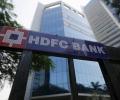
The country's most valuable lender HDFC Bank can perhaps no longer claim to be a favourite of foreign portfolio investors (FPIs). Two data indicators, both somewhat interconnected, point to this - the diminishing premium of HDFC Bank's American depositary receipts (ADRs) compared to local shares, and the ample investment opportunities available to FPIs in the domestic market. The ADR premium has shrunk to below 5 per cent, down from over 30 per cent in March 2021, and even lower than recent levels.

The broking industry's pecking order is set to change with Groww, a fin-tech startup from Bengaluru, poised to topple the industry's poster boy, Zerodha, as the leading brokerage in the number of active investors. According to data provided by the portal Topsharebrokers.com, Zerodha has 6.32 million active investors, while Groww is at 5.99 million. It is projected that Groww, which has grown at a much faster clip over the past two years, will surpass Zerodha this month, or next month.

Stake sales by promoters and private equity/venture capital (PE/VC) investors this year are already exceeding twice those of last year. So far this calendar year, the selling stands at over Rs 87,400 crore, 2.2 times the Rs 39,700 crore worth of shares sold by promoters and PE/VCs in 2022. This year's tally has received a boost from stake sales by Adani group promoters.

Deteriorating ties between India and Canada could have a bearing on flows into the domestic capital markets. At present, Canada is the seventh largest country for foreign portfolio investor (FPI) flows into India. According to the National Securities Depository Ltd (NSDL), the assets under custody (AUC) of FPIs domiciled in Canada stood at nearly Rs 1.8 trillion ($21 billion) at the end of August. Almost 85 per cent of these investments are in listed equity, while the remaining in debt and hybrid instruments.

The stock exchange on which they are traded boasts higher profits than most of the companies whose shares are hitting new highs. Only 37 of approximately 2,000 listed companies with comparable data for 2022-23 (FY23) reported higher profits, while the rest had lower profits. Despite rising corporate profitability, the universe of companies that outperform the National Stock Exchange (NSE) in terms of profitability has been shrinking of late, according to an analysis of companies with comparable data over the past seven years.

Meaningful market share would go to those who have the distribution strength to push their products, such as banks.

Shares of HDFC Bank will witness massive inflows totalling $600 million from passive trackers this week, predict analysts. This influx is attributed to the rebalancing activities in the S&B BSE Sensex and the Financial Times Stock Exchange (FTSE) indices. The Sensex is set for its quarterly rebalancing act on September 15 (date of adjustment), resulting in inflows of $102 million (approximately Rs 850 crore).

The OCCRP report alleges that at one point, EIFF and EMRF held free-floating shares ranging from 8 per cent to nearly 14 per cent in the four Adani Group companies.

Polycab India, Power Finance Corporation, Shriram Finance, and Union Bank of India appear poised to transition from the mid-cap to the large-cap category within the domestic mutual fund industry. Their market capitalisation (m-cap) now ranks among the top 100, which is the threshold for the large-cap universe defined by the Securities and Exchange Board of India.
 © 2026 Rediff.com - Advertise with us - Disclaimer - Privacy Policy - Sitemap - Feedback - About us - Terms of use - Grievances